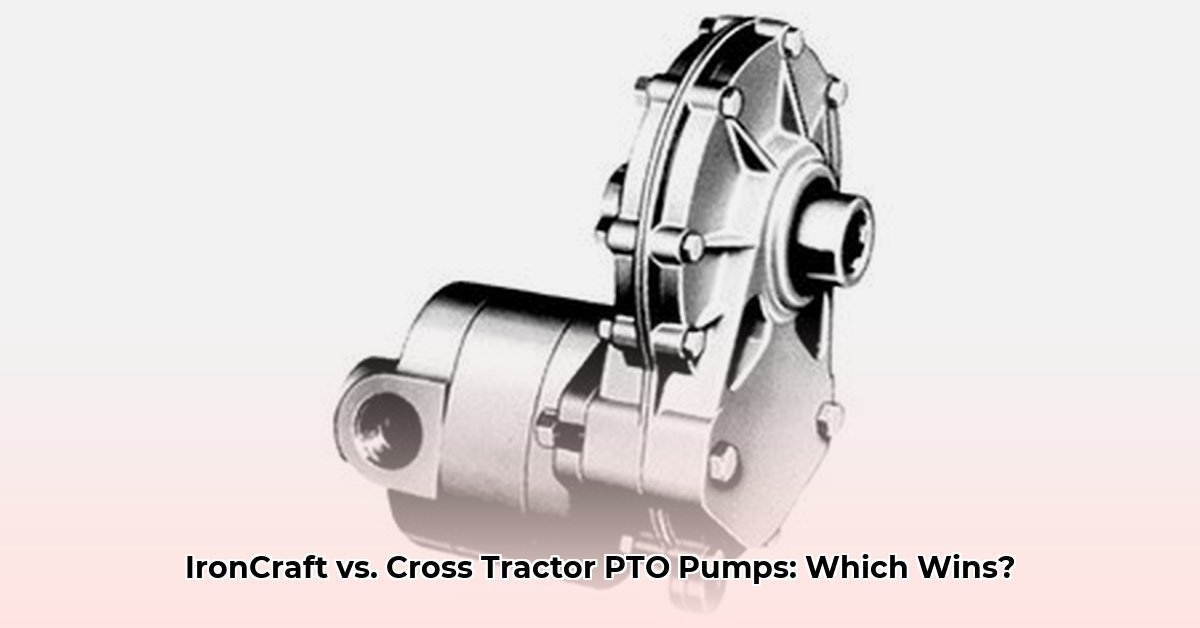
Choosing the right PTO-driven hydraulic pump significantly impacts your tractor's efficiency and your bottom line. This comparative review analyzes two popular options: the IronCraft IC-AUXKIT and the Cross Manufacturing 50T series, helping you determine which best suits your farm's needs. We'll examine flow rates, pressures, reservoir sizes, and other crucial factors to guide your decision. For more information on PTO hydraulic pumps, see our detailed guide: PTO Pump Guide.
Pumping Power: Flow Rate and Pressure
Hydraulic power is critical. Do you need a consistent flow for heavy-duty implements, or the flexibility to handle various attachments? The IronCraft IC-AUXKIT offers two fixed flow rates: 11.4 gallons per minute (GPM) or a higher 21.2 GPM. This reliable output is ideal for tools like large snow blowers or brush cutters demanding steady power. The higher GPM on the IronCraft likely translates to faster work completion.
Cross Manufacturing's 50T series offers adjustable flow rates, ranging from 9.6 GPM to a powerful 32.8 GPM. This versatility accommodates a wider range of implements, from smaller tools to large hay balers. However, this flexibility might introduce slightly greater complexity.
Pressure is equally important. The IronCraft pump delivers 2500 pounds per square inch (PSI), sufficient for most applications. Cross Manufacturing's pumps reach 3000 PSI, beneficial for heavier-duty tasks demanding greater force. This suggests Cross pumps may be superior in high-pressure applications.
Reservoir Capacity and Duty Cycles
Reservoir size directly impacts operational uptime. The IronCraft IC-AUXKIT boasts a 20-gallon reservoir, allowing for extended operation before refilling. Cross Manufacturing's reservoir size is unspecified, likely smaller, requiring more frequent refills, potentially interrupting workflow.
Weight and Maneuverability
Pump weight affects tractor stability and maneuverability, particularly on smaller tractors. The IronCraft IC-AUXKIT weighs 400 pounds (when full). This substantial weight necessitates a sturdy tractor. Cross Manufacturing's pumps are likely lighter, potentially better suited for smaller tractors prioritizing maneuverability.
Choosing the Right Pump: A Practical Guide
The ideal pump depends on individual needs.
Small-scale farms with consistent, heavy-duty needs: The IronCraft's simpler design and higher flow rates (where applicable to implements) might prove efficient and potentially less costly to maintain.
Larger farms with diverse needs: The Cross Manufacturing 50T series' adjustable flow rates and higher pressure capacity cater to a wider range of tasks. However, expect a higher initial cost and perhaps more complex maintenance.
Equipment manufacturers: Offering both IronCraft and Cross pumps allows for catering to diverse customer requirements and budgets.
Key Differences at a Glance:
| Feature | IronCraft IC-AUXKIT | Cross Manufacturing 50T Series |
|---|---|---|
| Flow Rate (GPM) | Fixed: 11.4 or 21.2 | Variable: 9.6 - 32.8 |
| Pressure (PSI) | 2500 | 2000 - 3000 |
| Reservoir Capacity | 20 gallons | Unspecified (likely smaller) |
| Weight (Filled, lbs) | 400 | Unspecified (likely lighter) |
| Cost | Generally lower | Generally higher |
| Versatility | Lower | Higher |
Beyond the Specifications: Long-Term Considerations
Regular maintenance is crucial for both pumps. This includes checking fluid levels, inspecting for leaks, and prompt repairs to prevent premature failure. Responsible disposal of hydraulic fluid is environmentally crucial. Consider eco-friendly options whenever possible. Choosing a pump is a significant investment; careful consideration of your individual requirements is paramount. Consulting with experienced farmers or equipment professionals can further enhance your decision-making process. Your farm’s needs will evolve; choose a pump that can adapt to your operation's growth.
Pivotal Points for Choosing Your PTO Hydraulic Pump:
- Flow rate directly impacts operating speed. Higher GPM means faster work for demanding applications.
- Pressure capacity determines the suitability for specific implements. Heavier equipment needs higher PSI.
- Reservoir size influences operational uptime. A larger reservoir reduces the frequency of refills.